
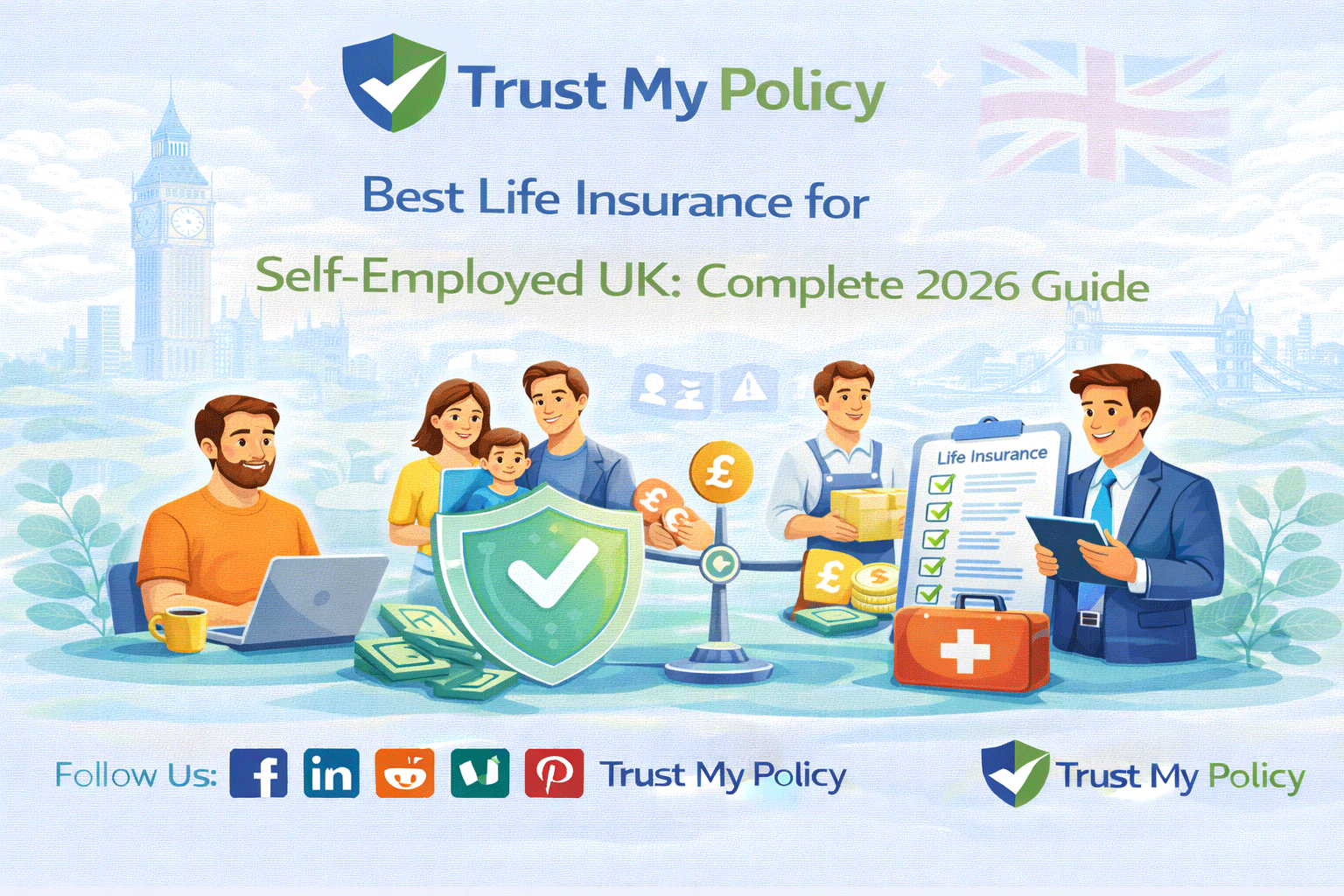
Self employed people in the UK need four core types of protection: (1) Term life insurance — pays a lump sum to dependants if you die; from £10–£30/month. (2) Income protection — replaces 50–70% of your earnings if you cannot work; from £15–£50/month. (3) Critical illness cover — lump sum on serious diagnosis; from £20–£50/month. (4) Key person insurance — protects the business from loss of your contribution. Income protection is the highest priority — the state only provides £90.50–£138.20/week via ESA, which covers almost nothing.
Ben, 36, a self employed IT contractor in Manchester, had been meaning to sort out life insurance ‘at some point’ for three years. He earned £72,000 a year. His wife worked part-time. They had two children under 7 and a £220,000 mortgage. One afternoon he fell off a ladder while clearing gutters. Fractured pelvis, three months off work. No employer sick pay. Statutory Sick Pay: £116.75/week for 28 weeks. His monthly mortgage payment alone was £1,100. His savings lasted six weeks. The experience cost him £23,000 in depleted savings and stress. He never did sort out income protection.
Being self employed in the UK means having freedom, flexibility, and no employer safety net. No death-in-service benefit. No statutory sick pay that covers your actual income. No employer pension contributions. No group health insurance. Everything that employed colleagues get handed as a workplace perk — you have to build yourself.
This guide covers every type of life and protection insurance a self employed UK person needs in 2026: life insurance, income protection, critical illness cover, and key person insurance — with real costs, specific provider recommendations, and guidance on tax efficiency for limited company directors.
| Protection | Employed Worker Gets | Self Employed Person Gets | Gap |
| Sick pay (short-term) | Employer sick pay — often 3–6 months at full/half salary | Statutory Sick Pay: £116.75/week for 28 weeks ONLY if paid Class 1 NI (not self-employed) | Virtually nothing for most sole traders |
| Long-term sick pay | Often 50–66% of salary via group income protection | Nothing — ESA: £90.50–£138.20/week maximum | £40,000–£60,000+/year gap for higher earners |
| Death benefit | Group life insurance: often 2–4x salary | Nothing | £76,000–£288,000 gap for average earner |
| Health insurance | Group PMI for many professionals | Nothing — NHS waiting lists apply | Months of delayed treatment |
| Pension contributions | Employer contributions (minimum 3%) | Nothing — entirely self-funded | Significant long-term wealth gap |
| ⚠️ The State Safety Net is Not a Safety Net
New Style Employment and Support Allowance (ESA) — the main benefit for self-employed people who cannot work — pays a maximum of £90.50/week during the assessment phase, rising to a maximum of £138.20/week in the support group. That’s approximately £550/month. The average UK mortgage payment is over £1,100/month. ESA does not come close to covering basic costs, let alone business expenses, personal debt, or anything approaching your actual income. |
Term life insurance pays a tax-free lump sum to your family if you die during the policy term. As a self employed person, you have no employer death-in-service benefit — this is the only protection your family has against the financial impact of losing your income permanently.
| Feature | Details |
| What it pays | Lump sum death benefit — typically £200,000–£500,000+ |
| Who needs it | Any self employed person with dependants, a mortgage, or business debts |
| Typical term | 20–25 years — until mortgage is cleared or children are financially independent |
| Monthly cost (non-smoker, 35, £250,000, 20-yr term) | £11–£16/month |
| Monthly cost (non-smoker, 42, £250,000, 20-yr term) | £18–£28/month |
| Write in trust? | Yes — essential. Avoids probate and potential 40% IHT on the payout |
| Tax deductible? | No — as a sole trader, premiums are a personal expense. Limited company: some structure available (see below) |
| Best providers | Legal & General (98.5% claim rate 2024), Aviva (98.2%), Royal London |
Income protection insurance pays you a monthly income — typically 50–70% of your pre-illness earnings — if you cannot work due to illness or injury. It continues until you recover, retire, or the policy term ends. This is the single most important insurance for self-employed people.
| Feature | Details |
| What it pays | Monthly income: 50–70% of your pre-illness earnings |
| Deferral period (excess period) | The wait before payments begin: 4, 8, 13, 26, or 52 weeks. Longer deferral = lower premium |
| Policy term | To retirement age (65, 67, or 68) — often called ‘long-term’ income protection |
| Definition of incapacity — critical | Own occupation: pays if you can’t do YOUR specific job. Suited occupation: pays if you can’t do a similar job. Any occupation: weakest — only pays if you can’t do ANY work. Always insist on ‘own occupation’ |
| Monthly cost (non-smoker, 35, £2,500/month benefit, 13-wk deferral) | £25–£45/month |
| Monthly cost (non-smoker, 42, £2,500/month benefit, 13-wk deferral) | £35–£60/month |
| Tax treatment | Premiums not tax-deductible. Benefit received is tax-free (unlike employer group income protection) |
| Best providers | The Exeter, Royal London, LV=, Holloway Friendly, Aviva |
| 💡 TIP: Always choose ‘Own Occupation’ definition
The definition of incapacity is the most important clause in any income protection policy. ‘Own occupation’ means the insurer pays if you cannot do your specific job — as a surgeon, architect, programmer, or consultant. ‘Suited occupation’ pays only if you can’t do any job similar to yours. ‘Any occupation’ pays only if you literally cannot work at all. Own occupation is the gold standard and what every self-employed professional should insist upon. |
Critical illness cover (CIC) pays a tax-free lump sum if you are diagnosed with a serious condition listed in the policy — typically including cancer, heart attack, stroke, and 40–80 other conditions. The payout is yours to use for whatever you need: mortgage, private treatment, adapting your home, or simply buying time to recover without financial pressure.
| Feature | Details |
| What it pays | Lump sum on diagnosis — typically £100,000–£250,000 (separate from life insurance) |
| Covered conditions | Typically 40–80 conditions. Zurich covers 41 for children as an add-on |
| Who needs it | Self-employed people whose income would stop during serious illness before income protection begins. Also useful for mortgage clearance |
| Combined with term life? | Yes — often bought as ‘life and critical illness’ combined policy. Costs more but often worth it |
| Monthly cost (non-smoker, 35, £150,000 term + CIC, 20 years) | £35–£55/month |
| Tax treatment | Premiums not tax-deductible as sole trader. Benefits received are tax-free |
| Best providers | Legal & General, Zurich, Aviva, Royal London |
Key person insurance is taken out by a business on the life or health of an individual whose death or incapacity would cause significant financial loss to the business. For self-employed people, this is often you — the business IS you.
Key person life insurance: Pays a lump sum to the business if a key person dies. Used to cover lost profits, recruitment costs, loan repayments, or business continuity during the transition period.
Key person critical illness: Pays a lump sum to the business on serious diagnosis of a key person. Allows the business to survive while the key person recovers.
Relevant life insurance (for limited company directors): A specially structured policy paid for by the company that provides life cover for a director. Premiums are an allowable corporation tax deduction for the company. The policy is held in trust, so the benefit passes to the director’s family free of inheritance tax. This is a highly tax-efficient alternative to personal term life for limited company directors.
| Policy Type | Who Pays Premium | Who Gets the Benefit | Tax Treatment |
| Personal term life (sole trader) | Individual — personal expense | Family/dependants | Not tax deductible; payout IHT-free if in trust |
| Key person life (business) | The business | The business — to cover commercial loss | Premiums may be corporation tax deductible; payout treated as trading revenue |
| Relevant life (Ltd Co director) | The limited company | Director’s family (via trust) | Premiums are corporation tax deductible; payout IHT-free |
Gap: No income protection. Three months off with fractured pelvis. £23,000 depleted from savings.
What he should have had: Income protection with a 4-week deferral period, paying £3,500/month (60% of average monthly income). At age 36, this costs approximately £30–£40/month with The Exeter or Royal London. The total cost of 3 years of premiums before the accident: £1,080–£1,440. The cost of not having it: £23,000 in depleted savings plus enormous stress.
Verdict: Income protection is not optional for self-employed people with a mortgage and dependants. It costs less per year than a weekend away and protects your family’s financial foundation against the most common risks: back problems, mental health, accidents, and serious illness.
Profile: Earns £55,000 as a sole trader. Mortgage: £185,000, 18 years remaining. Two children aged 4 and 6.
What she needs: (1) Level term life insurance: £250,000, 20 years — Legal & General, £13/month. (2) Income protection: £2,750/month benefit (60% of £55k, divided by 12), 13-week deferral, Royal London, £28/month. (3) Critical illness add-on to her term life: £35/month combined. Total protection package: ~£76/month.
Verdict: For £76/month, Priya has a complete protection portfolio: her family is covered if she dies, her income is replaced if she’s too ill to work, and she receives a lump sum if she’s diagnosed with a serious condition. This is far less than her monthly mortgage payment and covers the risks that could make that mortgage payment impossible.
Profile: Director of a profitable IT consultancy. Takes £12,500 salary and £40,000 dividends. Wants life cover but understands the tax position.
What he should use: Relevant life insurance paid by his company. His company pays the premiums as a corporation tax-deductible business expense. The policy is written in trust, so the payout goes directly to his family IHT-free. At age 44, £500,000 of relevant life cover costs approximately £25–£35/month — paid by the company before corporation tax, so the effective cost to David is reduced by the tax relief.
Verdict: Relevant life insurance is one of the most tax-efficient structures available to limited company directors. It provides the same death benefit as personal term life but at a significantly lower effective cost due to corporation tax deductibility. Always discuss this option with your accountant.
Profile: Recently went self-employed. Earns £28,000. No mortgage yet (renting). No children. Budget is tight.
What she needs NOW: Income protection is still the priority — even without a mortgage, losing her income means losing her rent, food, and ability to run her freelance business. A budget income protection policy with a 13-week deferral at £1,200/month benefit costs approximately £12–£18/month at age 31. Term life can wait until she has dependants or a mortgage.
Verdict: Even on a limited budget, some protection is always better than none. Start with income protection. Add term life when circumstances require it. Build the protection portfolio piece by piece rather than waiting until you can ‘do it all at once’ — which often means doing nothing.
| Policy | Age 30 | Age 38 | Age 45 |
| Term life, £250,000, 20 years, non-smoker | £9–£13/month | £13–£18/month | £22–£32/month |
| Income protection, £2,000/month, 13-wk deferral, own occ | £15–£22/month | £22–£35/month | £35–£55/month |
| Critical illness, £100,000, 20 years | £18–£28/month | £25–£40/month | £40–£65/month |
| Life + CIC combined, £200,000, 20 years | £25–£38/month | £35–£55/month | £55–£85/month |
| Full protection package (life + IP + CIC) | ~£50–£65/month | ~£65–£95/month | ~£100–£150/month |
Why: Established in 1836, Legal & General is the UK’s largest term life provider. Their 98.5% claim payout rate (2024) is among the best in the market. Standard wellbeing support included. Guaranteed insurability option available. Defaqto 5-star rated. Maximum age to purchase: 77.
Best for: Self-employed people who want a proven, affordable term life policy with strong claim reliability.
Why: The Exeter is specifically recognised as the gold standard for self-employed income protection. Their ‘own occupation’ definition for the self-employed is one of the most favourable in the market. Critically, their underwriting of variable self-employed income — using actual accounts and tax returns — is more realistic than many competitors who base payouts on a simpler formula that can undervalue irregular earners. Health+ PMI is Defaqto 5-star rated.
Best for: Freelancers, contractors, and sole traders who need income protection tailored to the reality of variable earnings and self-employed working patterns.
Why: Royal London is the UK’s largest mutual life, pensions, and investment company. Their income protection includes Helping Hand — specialist nurse support, vocational rehabilitation, and bereavement counselling. Their ‘reviewable’ premium term policies allow re-assessment if your income changes significantly. Defaqto 5-star rated.
Best for: Self-employed people who expect income growth over time and want flexibility built into their protection portfolio.
Why: Aviva offers life insurance, income protection, and critical illness cover as a combined package — simpler to manage and often with multi-product discounts. Their 98.2% life insurance claim acceptance rate is one of the UK’s best. DigiCare+ app included with health insurance policies. They also offer Relevant Life Insurance for limited company directors.
Best for: Self-employed people who want to consolidate multiple types of cover with one trusted provider and benefit from combined pricing.
Why: LV= has nearly 180 years of history and is consistently ranked among the top income protection providers. Their Flexible Protection Plan offers both ‘long-term’ and ‘budget’ income protection options — helpful for self-employed people who need to balance comprehensive cover with premium affordability. Claims payout record is strong.
Best for: Self-employed people who want strong income protection with flexibility between budget and comprehensive tiers.
Why: Holloway Friendly actually invented income protection insurance in 1875. As a mutual society, their policies include a participation benefit — members share in the profits. They’ve won the Moneyfacts ‘Best Income Protection Provider’ award 14 consecutive years (2010–2023). An often-overlooked gem for self-employed income protection.
Best for: Self-employed people who want a specialist, member-focused insurer with a long track record in income protection specifically.
| Policy Type | Sole Trader | Limited Company Director |
| Personal term life insurance | Personal expense — not tax deductible | Can pay personally (not deductible) or use Relevant Life (company pays, CT deductible) |
| Income protection | Personal expense — not tax deductible. Benefit received is TAX-FREE | Company can pay via Executive Income Protection — premium CT deductible; benefit taxable via PAYE |
| Critical illness (personal) | Personal expense — not tax deductible. Benefit tax-free | Personal expense as above; or company-paid (benefit potentially taxable) |
| Key person life insurance | N/A for sole traders | Company pays — premiums may be CT deductible. Benefit taxed as company trading revenue |
| Relevant life insurance | Not applicable to sole traders | Company pays — fully CT deductible. Benefit paid IHT-free to family via trust. Most tax-efficient option |
Life insurance protects your family if you die. Income protection protects your family if you can’t work — a more statistically likely event during your working years. For a 35-year-old self-employed professional, the chance of a long-term illness before retirement is approximately 1 in 3. The chance of dying before retirement is much lower. Always sort income protection first.
Comparison sites do a poor job of capturing the nuances of self-employed income protection — especially the definition of incapacity, the income basis, and the self-employed income verification process. Use an FCA-regulated independent broker who specialises in protection for the self-employed. LifeSearch, Reassured, or WeCovr are good starting points.
If your life insurance policy isn’t written in trust, the payout forms part of your estate. In England and Wales, this means: (1) probate delays of 6–12 months before your family can access funds; (2) potential 40% inheritance tax if your estate exceeds the £325,000 threshold. Writing in trust is free and takes 10 minutes. Do it at the time of application. Most providers do this automatically if you ask.
Self-employed income fluctuates. If you took out income protection when earning £30,000 and now earn £70,000, your benefit may only cover 43% of your current income. Review your protection annually and use the guaranteed insurability option to increase cover without a new medical exam when your income grows significantly.
Relevant life insurance is one of the most tax-efficient benefits available to UK limited company directors — and one of the least used. Your company pays the premiums as a corporation tax-deductible expense. The payout goes to your family IHT-free via trust. The effective after-tax cost is typically 20–25% lower than an identical personal policy. Every limited company director with dependants should explore this.
Self-employed people need four types of protection: (1) Term life insurance to replace income for dependants if you die; (2) Income protection insurance — the most critical — to replace your earnings if illness or injury stops you working; (3) Critical illness cover for a lump sum on serious diagnosis; (4) Key person insurance if the business depends heavily on your specific skills. Limited company directors should also consider Relevant Life Insurance as a tax-efficient alternative to personal term life.
Yes — income protection is specifically designed to be available to self-employed workers. Your benefit is based on your pre-illness income (using your business accounts and tax returns to verify). Premiums are not tax-deductible for sole traders, but the monthly benefit you receive if you claim is completely tax-free. This is one of the most valuable features of a personal income protection policy.
No — the premium for life insurance is based on your age, health, the sum assured, and the term length. Being self-employed does not directly affect your life insurance premium. Income protection premiums can vary based on your occupation class (some trades are rated higher risk than others), but being self-employed per se doesn’t automatically mean higher life insurance costs.
‘Own occupation’ is the most favourable definition of incapacity in income protection policies. It means the insurer pays out if you are unable to perform the material duties of your specific job — even if you could theoretically do a different type of work. For example, a self-employed surgeon with arthritis in their hands would receive the benefit even if they could theoretically work as a medical consultant. This is the definition every self-employed professional should insist upon.
Relevant life insurance is a life insurance policy taken out and paid for by a limited company for the benefit of a director or employee. The company claims the premiums as a corporation tax-deductible business expense. The policy is held in trust, meaning the death benefit passes directly to the director’s family free of inheritance tax. The effective cost is significantly lower than an identical personal policy — making it one of the most tax-efficient benefits a limited company director can arrange.
The standard guideline is 50–70% of your pre-tax income. For a self-employed person earning £50,000, this means a benefit of £25,000–£35,000 per year (approximately £2,083–£2,917/month). Choose a deferral period that matches your savings buffer — a 13-week deferral is common and significantly cheaper than a 4-week deferral. The benefit is paid tax-free, so even 50% replacement of pre-tax income typically represents over 60% of your take-home pay.
For the full picture of all types of self-employed insurance beyond life cover, see our insurance for self-employed UK guide. For self-employed people with health conditions navigating life insurance underwriting, our best term life insurance for diabetics over 40 guide covers the most common high-risk scenario.
| 📋 Disclaimer
This article is for informational purposes only. Always consult a licensed insurance professional before making coverage decisions. TrustMyPolicy.com does not sell insurance products or represent any insurer. |

Jagadeesh Gutha is the founder of TrustMyPolicy.com, an independent insurance information platform covering life, health, car, home, and business insurance for US and UK readers. He researches insurance products, policy structures, and consumer rights to help everyday people make informed coverage decisions without the jargon. All content on TrustMyPolicy is independently researched, fact-checked, and written to educate — not to sell.

Insurance Guides for UK, USA & Worldwide We are not an insurer or broker.
Reader Comments (0)