How to File an Insurance Claim: A Step-by-Step Guide for Beginners
Insurance helps protect people from financial loss when unexpected events happen. These events may include accidents, health emergencies, property damage, or theft. However, having an insurance policy alone does not provide financial help automatically. To receive compensation, you must file an insurance claim with your insurance company.
Many people feel confused about the insurance claim process. They may not know when to file a claim, what documents are required, or how long it takes to receive payment. Filing a claim incorrectly can delay approval or even lead to rejection. Because of this, understanding the correct process is very important.
A well-prepared claim can speed up approval and ensure that the insurer reviews your request smoothly. Whether you are filing a health insurance claim, car insurance claim, home insurance claim, or life insurance claim, the basic steps are often similar.
This guide explains how to file an insurance claim step by step in simple language. It also covers the documents required, common mistakes to avoid, real-life examples, and frequently asked questions. By the end of this article, you will clearly understand how the claim process works and how to improve your chances of a successful claim.
Insurance Claim Process
| Step | What It Means | Why It Matters |
|---|---|---|
| Notify the insurer | Inform the insurance company about the incident | Starts the claim process |
| Collect documents | Gather evidence such as bills, reports, and photos | Supports your claim |
| Submit claim form | Provide official information to the insurer | Required for claim review |
| Claim investigation | Insurer checks details and verifies documents | Prevents fraud and errors |
| Claim approval or rejection | Insurer decides whether to pay the claim | Determines outcome |
| Receive compensation | Approved amount is paid to policyholder or hospital | Final step in the process |
, benefits, and financial protection options available to policyholders. Many readers compare multiple guides before selecting a plan so they can clearly evaluate premiums, claim procedures, and long‑term advantages. A useful resource to explore is Life Insurance Policy Explained, which explains how this insurance policy works, the key benefits it offers, and situations where it may be the most suitable option. By reviewing this guide, you can gain deeper insights into coverage features, eligibility requirements, and practical tips that help individuals and families make smarter insurance decisions.
What Is an Insurance Claim?
An insurance claim is a formal request made by a policyholder to an insurance company asking for compensation after a covered loss or event.
The claim is based on the terms and conditions written in the insurance policy.
For example:
-
A person with health insurance may file a claim after hospital treatment.
-
A car owner may file a claim after an accident.
-
A homeowner may file a claim after property damage caused by fire or natural disasters.
-
A family may file a life insurance claim after the death of the insured person.
Once the claim is submitted, the insurance company evaluates the situation and decides whether the event is covered under the policy.
Types of Insurance Claims
Insurance claims can vary depending on the type of policy. Some common categories include:
Health Insurance Claims
These claims cover medical expenses such as:
-
Hospitalization
-
Surgery
-
Medicines
-
Diagnostic tests
Health insurance claims may be:
-
Cashless claims (insurer pays hospital directly)
-
Reimbursement claims (policyholder pays first and gets reimbursed)
Car Insurance Claims
Car insurance claims occur after events such as:
-
Road accidents
-
Vehicle damage
-
Theft
-
Natural disasters
The insurer may pay for repair costs or compensate for vehicle loss.
Home Insurance Claims
Home insurance claims may cover:
-
Fire damage
-
Flood damage
-
Theft or burglary
-
Structural damage
Life Insurance Claims
Life insurance claims are filed by beneficiaries after the policyholder’s death. The insurer pays the agreed sum assured if the policy conditions are met.
, benefits, and financial protection options available to policyholders. Many readers compare multiple guides before selecting a plan so they can clearly evaluate premiums, claim procedures, and long‑term advantages. A useful resource to explore is What Does Home Insurance Cover, which explains how this insurance policy works, the key benefits it offers, and situations where it may be the most suitable option. By reviewing this guide, you can gain deeper insights into coverage features, eligibility requirements, and practical tips that help individuals and families make smarter insurance decisions.
Detailed Comparison: Types of Insurance Claims
| Type of Claim | Trigger Event | Who Files the Claim | Payment Method | Common Documents |
|---|---|---|---|---|
| Health Insurance | Hospital treatment | Policyholder or hospital | Direct payment or reimbursement | Medical bills, discharge summary |
| Car Insurance | Accident or damage | Vehicle owner | Repair payment or settlement | Accident report, photos |
| Home Insurance | Property damage | Homeowner | Repair or compensation | Damage evidence, property documents |
| Life Insurance | Death of insured | Nominee or beneficiary | Lump sum payout | Death certificate, policy document |
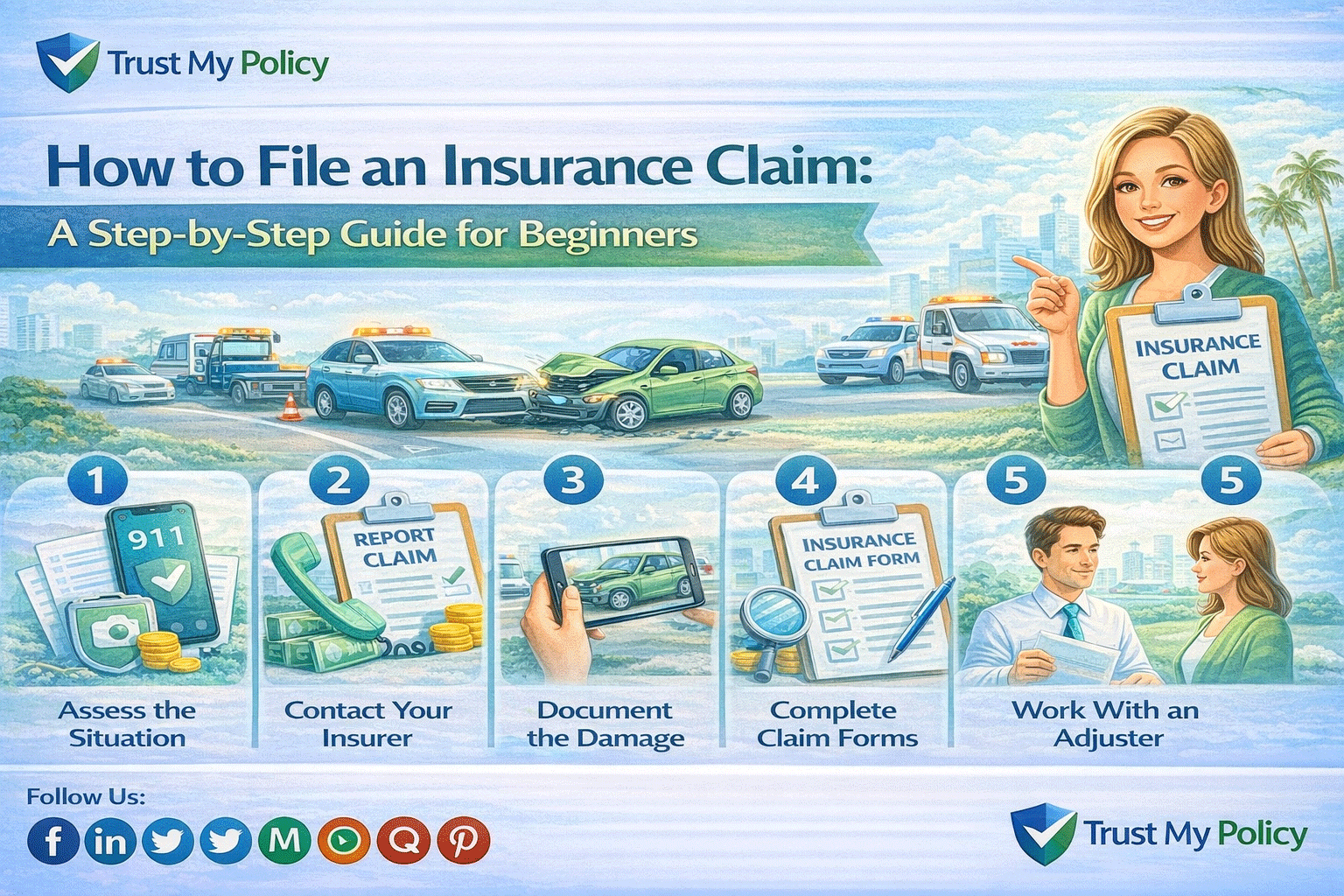
Step-by-Step Guide: How to File an Insurance Claim
Step 1: Inform the Insurance Company Immediately
The first step is to notify your insurer as soon as possible after the incident.
Many policies require timely notification, sometimes within 24 to 48 hours.
You can usually report a claim through:
-
Insurance company website
-
Mobile app
-
Customer service portal
-
Insurance agent
Quick reporting helps start the claim process faster.
Step 2: Review Your Policy Coverage
Before filing a claim, review your policy documents.
Check the following:
-
Covered events
-
Exclusions
-
Deductibles
-
Claim limits
Understanding your coverage helps determine whether your claim is eligible.
Step 3: Gather Required Documents
Insurance companies require documents to verify the claim.
Common documents include:
-
Insurance policy copy
-
Claim form
-
Identification proof
-
Incident report
-
Medical records or bills
-
Photos of damage
-
Police report (if required)
Having complete documentation reduces delays.
Step 4: Fill Out the Claim Form
The claim form is the official request for compensation.
Information usually required includes:
-
Policy number
-
Date of incident
-
Description of event
-
Estimated loss amount
-
Supporting evidence
Always provide accurate information to avoid claim rejection.
Step 5: Submit Supporting Evidence
Evidence helps insurers verify the claim.
Examples include:
-
Photos of vehicle damage
-
Hospital bills and prescriptions
-
Property repair estimates
-
Police reports for theft or accidents
Clear documentation strengthens your claim.
Step 6: Claim Investigation and Assessment
After submission, the insurer reviews the claim.
The investigation may include:
-
Document verification
-
Site inspection
-
Interviews
-
Medical assessment
Some claims may involve surveyors or adjusters who evaluate the loss.
Step 7: Claim Approval or Rejection
After investigation, the insurer decides whether to approve the claim.
Possible outcomes include:
-
Full approval
-
Partial approval
-
Claim rejection
Reasons for rejection may include policy exclusions or insufficient documentation.
Step 8: Claim Settlement
If the claim is approved, the insurer processes the payment.
Payment methods may include:
-
Direct bank transfer
-
Payment to hospital or repair provider
-
Lump sum payout
The settlement time varies depending on the policy and insurer.
, benefits, and financial protection options available to policyholders. Many readers compare multiple guides before selecting a plan so they can clearly evaluate premiums, claim procedures, and long‑term advantages. A useful resource to explore is Insurance Deductible Explained, which explains how this insurance policy works, the key benefits it offers, and situations where it may be the most suitable option. By reviewing this guide, you can gain deeper insights into coverage features, eligibility requirements, and practical tips that help individuals and families make smarter insurance decisions.
Pros and Cons of Filing an Insurance Claim
Advantages
-
Helps recover financial losses
-
Provides support during emergencies
-
Reduces out-of-pocket expenses
-
Offers protection against major risks
-
Ensures policy benefits are used
Disadvantages
-
Claim processing may take time
-
Some claims may be partially approved
-
Deductibles reduce payout amount
-
Claims history may affect future premiums
-
Documentation requirements can be extensive
Real-Life Examples of Insurance Claims
Example 1: Health Insurance Claim
A person is hospitalized for surgery. The hospital submits a cashless claim to the insurer.
The insurer verifies the treatment and approves payment directly to the hospital.
The patient only pays expenses not covered by the policy.
Example 2: Car Insurance Claim
A car owner is involved in a minor accident.
Steps taken:
-
The owner reports the accident to the insurer.
-
Photos of damage are submitted.
-
The insurer sends a surveyor to inspect the vehicle.
-
The repair cost is approved and paid to the repair center.
Example 3: Home Insurance Claim
A storm damages part of a roof.
The homeowner files a claim with photos and repair estimates.
After inspection, the insurer approves compensation for the repair.
, benefits, and financial protection options available to policyholders. Many readers compare multiple guides before selecting a plan so they can clearly evaluate premiums, claim procedures, and long‑term advantages. A useful resource to explore is Whole Life vs Universal Life Insurance, which explains how this insurance policy works, the key benefits it offers, and situations where it may be the most suitable option. By reviewing this guide, you can gain deeper insights into coverage features, eligibility requirements, and practical tips that help individuals and families make smarter insurance decisions.
Common Mistakes When Filing Insurance Claims
Many claims are delayed or rejected because of avoidable mistakes.
1. Delaying Claim Notification
Waiting too long to report an incident may violate policy terms.
2. Incomplete Documentation
Missing bills, reports, or evidence can slow the review process.
3. Providing Incorrect Information
Incorrect details about the event may lead to rejection.
4. Ignoring Policy Exclusions
Some events may not be covered under the policy.
For example:
-
Wear and tear damage
-
Cosmetic repairs
-
Certain medical treatments
5. Not Keeping Evidence
Photos, receipts, and reports help prove the claim.
Without evidence, approval becomes difficult.
Frequently Asked Questions (FAQs)
1. How long does an insurance claim take?
The time varies depending on the claim type and complexity. Some claims may be settled within days, while others may take several weeks.
2. What documents are required for an insurance claim?
Common documents include:
-
Policy document
-
Claim form
-
Identification proof
-
Bills and receipts
-
Incident reports
-
Supporting evidence such as photos.
3. Can an insurance claim be rejected?
Yes. Claims may be rejected if the event is not covered, documents are missing, or policy terms are not met.
4. What is a deductible in insurance claims?
A deductible is the amount the policyholder must pay before the insurer covers the remaining expenses.
5. Can I track the status of my claim?
Many insurers allow policyholders to track claim status through websites, mobile apps, or customer service portals.
6. What happens if my claim is partially approved?
The insurer may pay part of the claim based on coverage limits or policy conditions.
7. Should I file a claim for small losses?
Sometimes it may not be beneficial if the repair cost is lower than the deductible.
, benefits, and financial protection options available to policyholders. Many readers compare multiple guides before selecting a plan so they can clearly evaluate premiums, claim procedures, and long‑term advantages. A useful resource to explore is How Insurance Companies Calculate Premiums, which explains how this insurance policy works, the key benefits it offers, and situations where it may be the most suitable option. By reviewing this guide, you can gain deeper insights into coverage features, eligibility requirements, and practical tips that help individuals and families make smarter insurance decisions.
Conclusion
Filing an insurance claim is an essential step to receive financial support after an unexpected loss. While the process may seem complicated at first, understanding the basic steps makes it much easier.
The key steps include notifying the insurer quickly, reviewing your policy coverage, collecting necessary documents, submitting a claim form, and cooperating with the insurer during the investigation process. Careful preparation and accurate information can improve the chances of claim approval.
Insurance claims exist to provide financial protection during difficult situations. By understanding how the process works, policyholders can handle claims more confidently and reduce delays or complications.
Taking time to learn about your policy terms, keeping documents organized, and reporting incidents promptly can make the claim process smoother and more efficient.
Disclaimer:
“Disclaimer: This article is for educational purposes only. Trust My Policy is an independent informational platform and does not sell insurance products or represent any insurance provider. Readers should consult official policy documents or licensed professionals for personalized advice.”